Nobody decides to let a friendship fade. It just tends to happen a text at a time: one delayed reply, one skipped catch-up, one "next week" that becomes three months. By the time you notice, you're not sure when it started, only that it did, and that pointing to a single cause would be dishonest. This isn't a list about friendships ending badly. It's about the specific, small tells that show up long before either of you would call it a problem, and it's a big part of why keeping a friendship journal in the first place is worth the trouble.
The signs are quieter than a fight
None of these mean the friendship is over, or that anyone did anything wrong. Most of the time they show up between two people who still genuinely like each other, and would say so if you asked. That's what makes them easy to miss: there's no moment that forces you to notice, just a slow lowering of how often you show up in each other's day.
- You have to scroll to remember when you last talked. If figuring out roughly when you last spoke means checking your messages instead of just knowing, the gap has already gotten bigger than it feels.
- Every conversation opens with an apology. "Sorry I've been so bad at texting" becomes the first line of every exchange, which usually means the gap itself has become the main topic, ahead of whatever either of you actually wanted to say.
- You hear their big news from Instagram, not from them. A new job, a move, a breakup, and you find out from a caption weeks later instead of a call when it happened. That's a quiet demotion from friend to audience.
- The whole interaction has shrunk to a like or a story reply. Reacting is easier than writing a message, so it slowly becomes the entire friendship, even though it doesn't feel like actually talking to each other.
- "We should get lunch" has been said three times with no lunch. The intent is real. Nobody's lying. It just never turns into an actual date on an actual calendar, so it stays a nice sentiment instead of a plan.
- You've stopped being each other's default plan. When something happens, good or bad, they're no longer near the top of who you'd call, and if you're being honest, that's mutual now.
- Seeing them again would need an occasion. A wedding, a funeral, someone visiting town, not a random Tuesday. The friendship still exists, but only shows up when something external forces it to.
What actually fixes it (spoiler: not "we should catch up soon")
"We should catch up soon" is the friendship equivalent of a plan that never gets scheduled. It feels like doing something, but it costs nothing and commits to nothing, which is exactly why it doesn't work. Here's what tends to actually move things.
Reply to the actual thing, not a generic "hey"
Instead of "hey, how have you been," reference the specific thing they mentioned last time: the interview they had, the trip they were planning, the thing their kid said that made them laugh. It signals you were actually listening, and it's a much easier message to reply to than an open-ended check-in.
Lower the bar for what counts as reaching out
You don't need an update-worthy life event to text someone. Sending the meme that reminded you of them counts. A one-line "thinking of you" counts. Waiting for something substantial enough to justify a message is usually what stretches the gap in the first place.
Give the friendship a repeating anchor
A standing plan, like a call on the first Sunday of the month or coffee whenever you're both in town, takes the friendship off the "whenever we get around to it" list. It doesn't have to be frequent. It just has to be a fixed point neither of you has to remember to suggest.
Stop trusting your memory to flag who's overdue
This is the part I got genuinely bad at, which is part of why I ended up sorting my friends by who's overdue instead of trusting my gut to notice. Memory is bad at tracking gaps that grow gradually, since a week feels the same as it always does right up until it's been eight months. A friend log that just shows you how long it's actually been does the noticing for you.
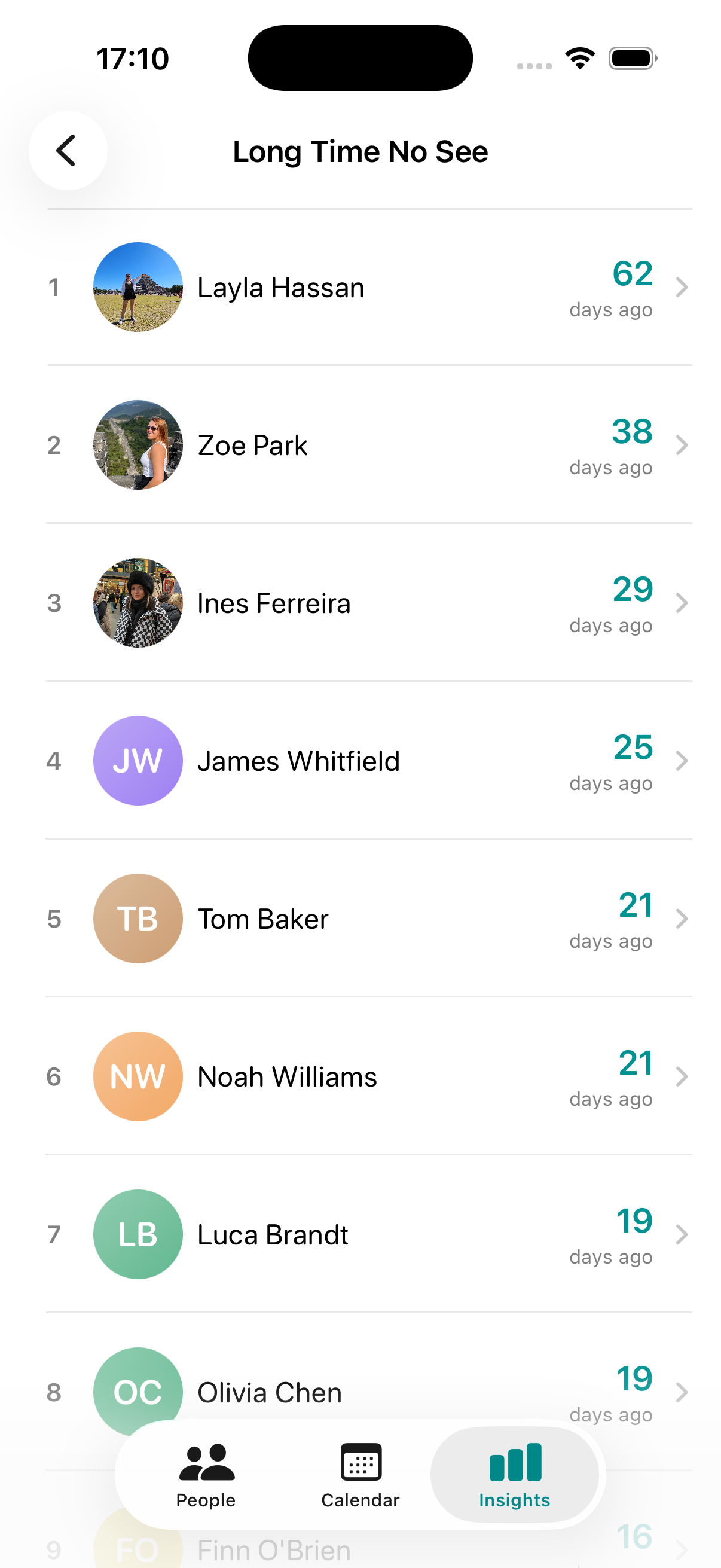
You don't drift apart from people because you stopped caring. You drift because nothing forced you to notice the gap until it was already wide. The fix isn't caring more. It's having something that notices before you have to.
FAQ
How do you know if you're losing touch with a friend?
The signs are usually quiet rather than dramatic: checking your messages to remember when you last talked, opening every conversation with an apology for disappearing, hearing their big news from social media instead of from them, and needing an occasion like a wedding to actually see each other.
Is it normal to lose touch with friends?
Yes. Most friendships drift because of logistics, not conflict: a move, a new job, or losing a shared routine that used to force contact without either person trying. It happens to nearly everyone and isn't a sign the friendship wasn't real.
How do you reconnect with a friend you've lost touch with?
Skip the generic "we should catch up soon," since it stays a comment instead of becoming a plan. Reference something specific they told you last time, propose an actual date, and consider a recurring point of contact so the friendship doesn't depend on either of you remembering.
What usually causes friends to drift apart?
Most of the time it's logistics rather than a falling out: distance, a new job or relationship, or losing the shared routine that used to create contact automatically. Once that automatic contact disappears, staying close takes effort that's easy to keep postponing.
Where BuddyLog fits
BuddyLog won't send the text for you, but it will tell you who's actually overdue instead of leaving that up to a memory that's bad at tracking slow gaps. Log the people who matter, note when you last saw them, and let the app do the noticing your gut keeps missing. For the full picture of what that looks like as a habit, see the complete guide to friendship journals.